
You can have the most advanced fulfillment network in the world and still lose sales.
As ecommerce brands expand beyond Amazon into Shopify, Walmart, DTC, wholesale, and other marketplaces, inventory planning is often the real bottleneck. Products move faster, demand fragments across channels, and small forecasting mistakes quickly turn into stockouts, excess inventory, or inventory sitting in the wrong place.
Amazon Supply Chain Services were built to help sellers scale that complexity. With transportation, warehousing, and fulfillment managed through a single ecosystem, Amazon makes it easier to support off-Amazon demand using the same infrastructure that powers its own network.
But while Amazon Supply Chain Services simplifies execution, success still depends on how well inventory decisions are planned upstream. Inventory Optimizer ensures those execution decisions are based on accurate, multi-channel demand rather than assumptions.
The Promise of a Unified Supply Chain
Amazon’s integrated services help sellers streamline execution across channels with:
- Improved inventory turnover by consolidating stock into a single, flexible pool
- Lower transportation costs, with pre-negotiated carrier rates averaging 25% savings
- Fast, reliable delivery, with click-to-door speeds over 50% faster than other major retailers
- Broad channel connectivity, supporting 100+ ecommerce platforms
For sellers focused on operational scale, Amazon’s infrastructure removes friction from fulfillment and logistics.
How Amazon Supply Chain Services Work Together
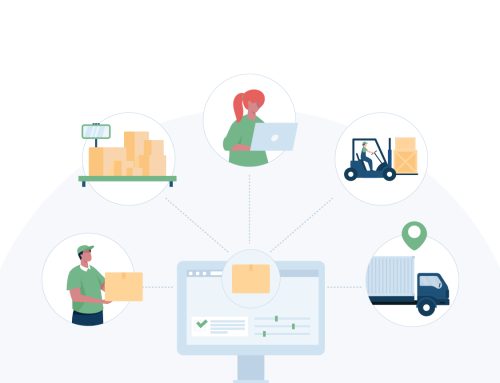
Amazon’s offering spans the full supply chain, from origin to final delivery:
- Amazon Global Logistics (AGL) moves inventory directly from manufacturing hubs like China or Vietnam into Amazon’s network via ocean or air freight.
- Multi-Channel Distribution (MCD) enables bulk storage in Amazon Warehousing & Distribution (AWD) facilities and supports fulfillment across channels.
- Multi-Channel Fulfillment (MCF) allows Amazon to pick, pack, and ship orders from non-Amazon sales channels with real-time tracking.
Together, these services create a powerful execution engine for multi-channel sellers.
Where Forecasting Becomes Critical
While Amazon Supply Chain Services streamline logistics, they do not solve forecasting complexity on their own. Inventory still needs to be:
- Ordered at the right time
- Allocated across FBA, AWD, and MCF correctly
- Sized to support total demand—not just Amazon demand
This is where many sellers run into trouble. Fulfillment systems execute orders, but they don’t always forecast demand across every channel, supplier, and lead time variation.
Without accurate forecasting, sellers risk stockouts, misplaced inventory, and excess stock tied up in the wrong locations.
Why Inventory Optimizer Completes the Picture
Amazon Supply Chain Services provide a powerful execution layer—but they assume you already know what to send, when to send it, and where it should live. That’s where many multi-channel sellers struggle.
Inventory Optimizer sits above Amazon’s fulfillment network to solve the planning problem upstream.
By forecasting total demand across Amazon, Shopify, Walmart, and other channels, Inventory Optimizer gives sellers the clarity needed to:
- Accurately size purchase orders before inventory enters AGL
- Allocate inventory intentionally across AWD, FBA, and MCF
- Account for lead times, MOQs, case packs, and supplier variability
- Adjust forecasts automatically as demand and velocity change
Instead of reacting to stockouts or relying on channel-specific recommendations, sellers gain a single, reliable forecast that reflects how their business actually operates.
The Takeaway
Amazon Supply Chain Services make it easier to move, store, and fulfill inventory across channels—but fulfillment is only as effective as the forecast behind it.
Inventory Optimizer ensures Amazon’s infrastructure is fed with the right inventory decisions, so products arrive on time, flow to the right fulfillment nodes, and support every sales channel without excess or shortages.
When forecasting and fulfillment work together, scaling beyond Amazon becomes not just possible, but repeatable, controlled, and profitable.
If you’re using Amazon Supply Chain Services to grow off-Amazon sales, Inventory Optimizer is the forecasting engine that makes that growth sustainable.